|
| |
| |
| |
| | | |
| | |
WELCOME BACK!
Two weeks ago, I ended my first newsletter with a question.
Where are you leading from the outside in? Where are you letting pressure, expectations, or other people's definitions of success drive your decisions instead of your own values? I have been reflecting on this myself.
For much of my career, I led from the outside in far more often than I care to admit. I measured myself against the expectations of the institutions I served. I equated self-sacrifice with leadership. I confused silence with commitment. It took me years to realize those are not the same thing.
Sometimes commitment means speaking the sentence no one else wants to say. Sometimes integrity means disappointing the people who expected your compliance. Sometimes the bravest leadership decision is the quiet moment when you stop asking, "What do they want from me?" and start asking, "What do my values require of me?" I'm still learning that lesson. If you reflected on that question over the past two weeks, I'd genuinely love to hear what came up for you.
Because that's the thread I want to pull today. Why do so many of us lead from the outside in? Where did we learn to do this? Why does it feel so normal? And how do we begin leading from the inside out instead?
The answer usually isn't found in one dramatic moment. It is built through hundreds of ordinary decisions. Choosing to keep quiet. Choosing to push through exhaustion. Choosing approval over authenticity. Those small decisions shape the leaders we become.
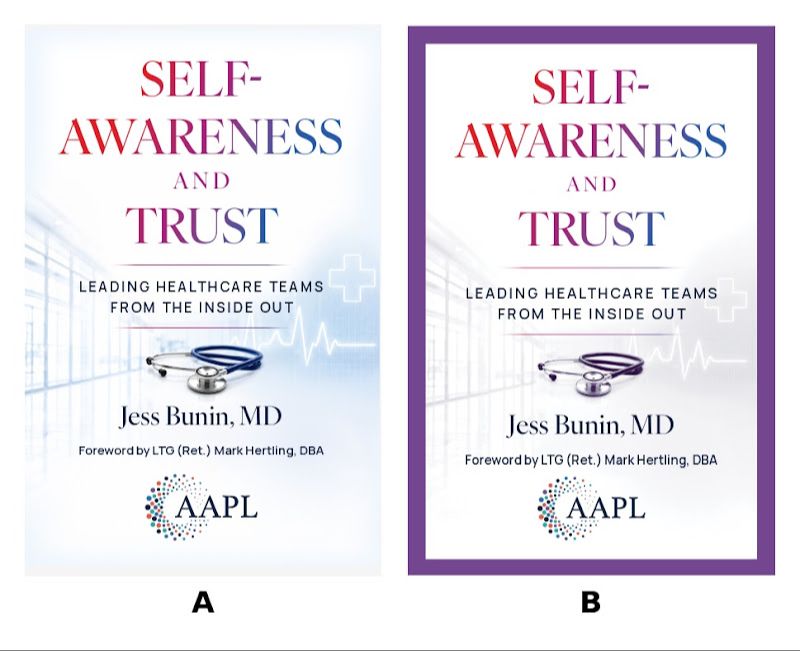
They are also where my book begins. |
| | | |
| | | |
| | | |
| | |
A LEADER I AM WATCHING
Earlier this year, I had the privilege of meeting LTG (Ret.) Mark Hertling as we began planning for a panel in this year's Women in Medicine Summit. I have to admit, he won me over almost immediately, although perhaps not for the reason you might expect. Behind him, hanging on the wall, was his Army Swimming letter. As a fellow Army swimmer, that was all it took for an instant connection. Go Army Swimming and Diving! But that shared history was only the beginning. Over the months that followed, I came to know the man behind the remarkable résumé, and I found someone whose impact reaches far beyond the ranks he held or the positions he has occupied.
Mark has spent a lifetime leading, whether commanding soldiers in combat, transforming physician leadership in healthcare, or mentoring the next generation through his teaching and writing, including Growing Physician Leaders and If I Don't Return: A Father's Wartime Journal. What has impressed me most is not the breadth of his accomplishments, extraordinary as they are. It is the consistency of his character. He is the kind of leader who quietly invests in others, who mentors and sponsors with generosity, and who refuses to compromise his values, even when doing so would be easier or more convenient. In a world where conviction is often traded for comfort, Mark embodies moral courage. He reminds me that the strongest leaders are not simply those who inspire from a stage or lead from the front. They are the ones who choose integrity, every single day. |
| | | |
| | | |
| | | |
| | |
CONNECT WITH JESS
How to Have a Difficult Conversation; Learning to Lead Podcast aired Jul 8, 2026
Upcoming Events:
- Triservice ACP: Aug 26-28, 2026 - Presenting: Can leaders have a bad day? Bethesda, MD
- WIM Summit: Sept 24–26, 2026, Chicago, IL
- She’s Too Much, She’s Not Enough: Gendered Communication and Feedback in Medicine
- Leading Under Crisis Panel Discussion Moderated by LTG (ret) Mark Hertling
- StandUp4Doctors Retreat: Oct 9–12,2026, Ossining, NY
- American Association of Physician Leadership, Oct 22-24. Presenting: Across the Divide: A Practical Workshop in Civil Discourse, Scottsdale, AZ
- International Coaching Federation, Converge 2026, Oct 28-30, Washington, DC |
| | | |
| | | |
| | | |
| | |
| ONE QUESTION FOR REFLECTION
What signals do I send to those around me about illness, rest, and asking for help?
I will write again in two weeks.
Warmly,
Jess |
| | | |
| | | |
|